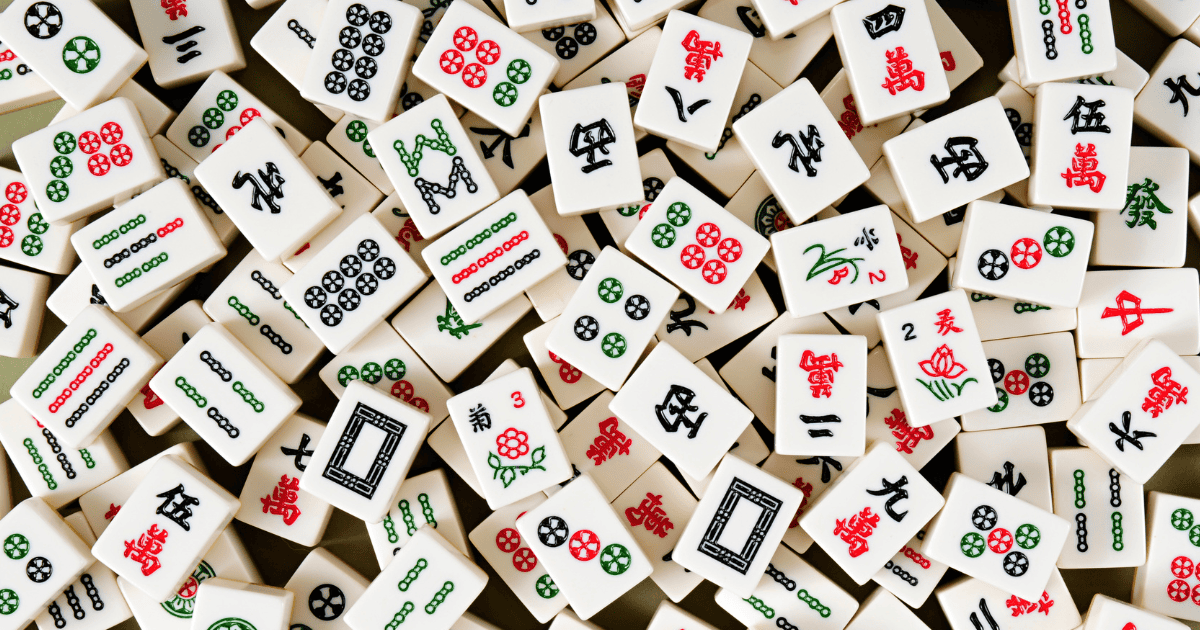
The Brain-Boosting Power of the Tiles: Why Mahjong is the New Essential for 2026

Noticed a clicking sound of tiles at your local coffee shop or seen your friends huddled over colorful cards lately? You aren’t imagining it. Mahjong is officially having a “moment.” While it’s been a staple in many communities for decades, it has exploded into the mainstream. This year, it’s being dubbed the “pickleball of the mind.”
As we look for ways to stay sharp, connected, and active in 2026, Mahjong hits the perfect trifecta: it’s deeply social, incredibly tactical, and has some serious science backing its benefits for our long-term health.
- The Vagus Nerve: Your Body’s Hidden “Reset” Button for 2026
- Why Cinnamon May Be A Great Thing For Your Health
The Science: Why Your Brain Loves the Tiles
We talk a lot about “biohacking” and nervous system regulation here at Living Well for Seniors, but sometimes the best health tool is sitting right on your card table.
Recent longitudinal studies published in Frontiers in Public Health have followed players for over a decade, and the results are stunning. Regular Mahjong play has been shown to:
- Reduce Dementia Risk: Frequent players showed a 37% lower risk of developing dementia compared to non-players.
- Improve Executive Function: The game requires constant planning, decision-making, and “pivoting” (shifting your strategy mid-game), which keeps your neural pathways flexible.
- Boost Short-Term Memory: Tracking which tiles have been discarded while simultaneously scanning your own hand for patterns is like a high-intensity interval workout for your working memory.
How to Play: A Quick-Start Guide
If you’ve never played, don’t let the 152 tiles intimidate you! Most groups in the U.S. play American Mahjong using the National Mah Jongg League (NMJL) rules. Here is the simplified flow:
- The Goal: You are trying to be the first person to build a hand of 14 tiles that matches one of the specific patterns on the Official 2026 NMJL Card.
- The Setup: Four players each build a “wall” of tiles. You’ll deal out 13 tiles each (the dealer gets 14).
- The Charleston: This is a unique “pre-game” where you pass tiles you don’t want to other players. It’s the best time to socialize and see what strategy might work.
- The Play: You draw a tile, then discard one. If someone discards a tile you need to complete a set (a “Pung” of 3 or a “Kong” of 4), you can call it!
- Mahjong!: When your hand matches a line on your card perfectly, you declare “Mahjong!” and win the round.
The “Practice Range”: Why Solitaire Mahjong Matters
You might be wondering: “Is the online game on this site the same as the four-person game at the club?” Not exactly, but it is the secret weapon for every successful player.
Think of the LW Mahjong on our site as your mental practice range. While the social version is about strategy and people, Solitaire Mahjong is about visual speed and pattern recognition. Playing solitaire helps you:
Identify Tiles Instantly: In a real game, you only have seconds to decide if you need a “6-Bam” or an “8-Dot.” Playing solitaire trains your eyes to recognize the symbols without hesitation.
Low-Stress Brain Training: It’s a meditative way to get those cognitive benefits we talked about earlier—improving your focus and short-term memory—even when you don’t have three friends ready to play.
Ready to Play In Person? (The Gear We Love)
If you’re looking to start your own “Mahjong Monday,” there are some beautiful, modern options available right now that feel more like home decor than a board game.
- The 2026 National Mah Jongg League Card: This is non-negotiable! Every year the patterns change. I recommend the Large Print version for easy reading during fast-paced games.
- American Mahjong Game Set: 166 tiles with a portable bag.
- Etsy: There are some gorgeous custom sets available on the website.
- I Love Mahj: For those who want to practice at home before joining a live group, this is the gold-standard site for playing against bots to learn the 2026 card patterns.
Where to Play
While there isn’t one single “government” body for the game, there are three major national resources you can use to find a local table or start playing online.
1. The National Mah Jongg League (NMJL) This is the “gold standard” for American Mahjong. They have been around since 1937 and are responsible for the official rules and the annual “card” that players use.Official Online Game: They have their own official online game platform where members can play against others across the country.Member Directory: While they don’t have a public “map,” being a member gives you access to their network, and they are the primary source for the cards everyone uses.
2. American Mah Jongg Association (AMJA) The AMJA is a massive national resource focused on strategy, rules, and community.Tournament & Teacher Locators: They are one of the best places to find certified teachers and large-scale tournaments across the U.S., which are great places to meet players.
Specialized Player Directories
Since many games are played in homes or local clubs, several national “hubs” have created directories specifically to help people find each other:
Where the Winds Blow: This site hosts a very active National Mah Jongg Group Directory. It lists groups by state, meeting times, and skill levels (from Alabama to Wyoming).
Sloperama: Run by a well-known expert in the field, this site has a famous bulletin board where players and teachers from all over the country post their locations to find new “fourths” for their games.
Bam Good Time: This is a newer, modern platform that hosts a public club directory. It’s very popular for newer players looking for a more “social” or casual club vibe.
If you can’t find a group in these directories, check your local Jewish Community Center (JCC) or Senior Center. Even if you aren’t a member, these centers are almost universally the “home base” for Mahjong in any given city.
Whether you’re looking to strengthen your memory or just looking for a reason to get together with the girls and laugh for a few hours, Mahjong is the answer for 2026. It proves that “living well” isn’t just about what we eat—it’s about keeping our minds engaged and our social circles vibrant.
Ready to test your eyes? Head over to our Mahjong Page and try a round of Solitaire Mahjong right now. It’s the perfect way to sharpen your skills before your next club meeting. Grab a cup of tea, start matching those tiles, and let’s keep those brains brilliant!
Practicing for a local club? Tell us in the comments where you play!






It’s a fun game and I’m obsessed but now I can say I’m doing it for the benefits to my brain.
Yes! I support your obsession, lol.
Lisa, I have played this for years. Really relaxing to me. I also play word trip. Have a great rest of your week.
It is fun, except the timed versions. They give me stress, lol. I hope your week is going well!
I love this article! MahJongg is a passion of mine. I teach MahJongg at our local library, and I play with friends or online (at RealMahJongg.com) several times a week. Such a fantastic and fun game! Thank you.
Good for you, that’s awesome! I’d like to learn one day.