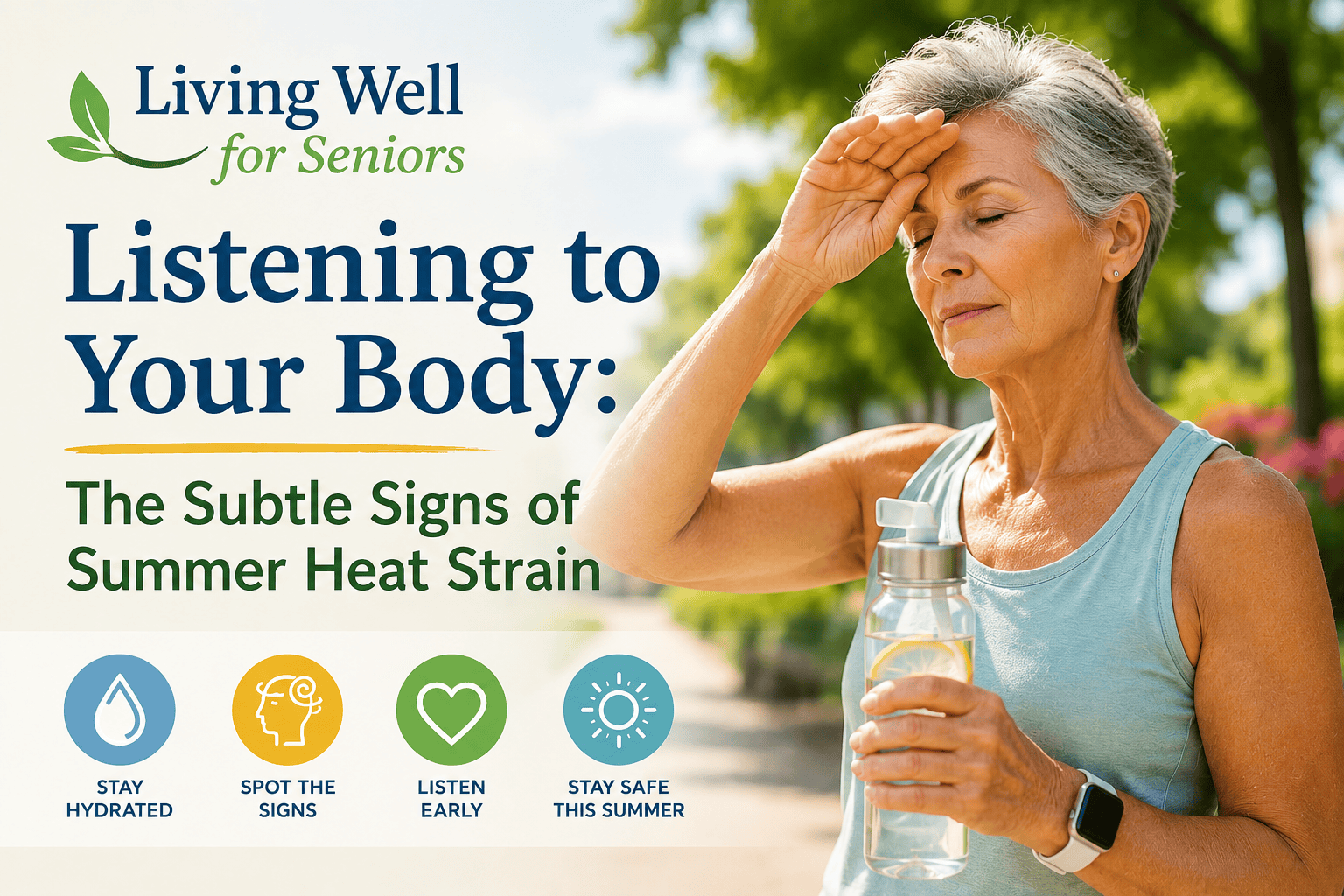
Listening to Your Body: The Subtle Signs of Summer Heat Strain
The first true heatwave of the season always catches us a bit off guard. One day we are enjoying a crisp morning breeze, and the next, a blanket of heavy, humid air settles over the porch before the coffee is even done brewing.
For those of us who prioritize staying active, independent, and engaged with the world, a heat advisory can feel like an annoying speed bump. The natural instinct is often to simply push through, to finish that extra pickleball match, complete the garden weeding, or stick to our usual afternoon routine.
But extreme heat changes the rules of engagement for our bodies. Managing the summer sun isn’t about hiding indoors until September; it is about cultivating a sharp, sophisticated self-awareness. Our bodies speak to us in whispers long before they shout, and learning to read those subtle shifts is the ultimate tool for staying safe, healthy, and active all summer long.
The Whispers: Overlooked Signs of Heat Strain
We all know the dramatic red flags of heat exhaustion, dizziness, nausea, or heavy sweating. However, heat strain often begins with much quieter, easily dismissed signals that we frequently mistake for “just having an off day.”
- The Sudden Mood Shift: If you find yourself uncharacteristically irritable, impatient, or struggling to focus on a simple task, it might not be mental fatigue. When the body works overtime to pump blood to the skin to cool down, the brain receives less oxygen, leading to quick shifts in mood and concentration.
- The “Heavy” Feeling: When a routine walk or daily chore suddenly feels like you are moving through wet cement, your body is waving a yellow flag. Your cardiovascular system is working twice as hard to maintain a safe core temperature.
- The Phantom Headache: A dull ache right behind the eyes or at the base of the skull is a classic, early indicator of mild dehydration and heat stress, often occurring before you even feel thirsty.
- The Unusually High Pulse: If you wear a fitness tracker or smartwatch, keep an eye on your resting heart rate. If your pulse is significantly higher than usual during a gentle activity, the heat is taking a toll behind the scenes.
The Pulse-Point Protocol: Elegant Ways to Cool Down Fast
If you catch yourself experiencing any of these early signs, pushing through is the worst strategy. Instead, deploy an intentional, rapid cool-down routine to assist your nervous system.
Target the Pulse Points: Running cold water over your wrists, placing an ice wrap on the back of your neck, or applying a chilled, damp cloth to your temples works like a charm. Because large blood vessels run close to the skin in these areas, cooling them helps lower your core temperature much faster than just sitting in front of a fan.
- Elevate and Rest: Sit in a cool, shaded, or air-conditioned space and elevate your feet. This helps blood circulate back to your heart and brain, easing the workload on your cardiovascular system.
- Hydrate Vertically, Not Horizontally: Don’t chug a massive glass of ice water all at once, which can shock the stomach. Sip cool water steadily over 30 minutes.
Additional Hydration & Cooling Wisdom
Don’t Forget the Salt: When you sweat, you lose more than just water, you lose essential minerals. Drinking massive amounts of plain water without replacing electrolytes can actually dilute your system (a condition called hyponatremia). Integrating a pinch of high-quality salt into your drinks or enjoying a mineral-rich snack like a handful of salted nuts keeps your body’s chemistry perfectly balanced.
The “Room Temp” Secret: While an ice-cold drink feels incredibly satisfying in the moment, room-temperature or slightly cool water is actually absorbed by the body much faster. Extremely cold liquids can cause the stomach to temporarily constrict, slowing down how quickly your system can use the hydration.
Track by the Tint: The easiest, most accurate way to check your hydration level doesn’t require a smart device. Simply look at the color of your urine. You are aiming for a pale, straw-like yellow. If it looks like apple juice, your body is actively begging for more fluids.
Midsummer Mocktail: The Cucumber-Mint Hydration Elixir
When you’ve been sweating, plain water isn’t always enough to restore balance. Skip the neon, sugar-laden sports drinks and whip up this clean, refreshing, “modern organic” alternative. Coconut water provides natural potassium, while a pinch of high-quality sea salt replaces vital sodium.

Ingredients:
- 1 cup pure coconut water (unsweetened)
- 1 cup filtered water or sparkling water
- Juice of half a lime
- 2-3 slices of fresh cucumber
- 3-4 fresh mint leaves, gently slapped to release the oils
- A pinch of pink Himalayan sea salt or Celtic sea salt
- Ice cubes
Instructions: Muddle the mint and cucumber at the bottom of a tall glass. Fill the glass with ice. Pour in the coconut water, filtered water, and lime juice. Add the pinch of sea salt and stir thoroughly. Garnish with an extra sprig of mint and enjoy immediately.
Adapting with Intention
Living well means knowing when to pivot. When the thermometer climbs into the nineties, shifting our energy isn’t a concession; it’s smart strategy. Swap the afternoon outdoor chore for a morning project, move the workout into an air-conditioned space, and treat an exceptionally hot afternoon as the perfect excuse to slow down, read, or dive into a creative indoor project. By listening to the whispers today, we ensure we stay strong, vibrant, and ready for the rest of the season.
Ultimately, summer is meant to be savored, not endured. Taking a step back on high-heat days isn’t about letting the weather dictate your life; it’s about choosing to navigate the seasons with wisdom, grace, and an eye toward longevity. Listen to your body, pour yourself a refreshing drink, and enjoy the beauty of a slower, sun-drenched afternoon.
A Note on Health & Longevity: While listening to your body’s quiet signals is an incredible daily practice, it is never a substitute for professional medical care. If you or a loved one experiences a rapid pulse that won’t slow down, confusion, severe dizziness, or a sudden inability to sweat, these are signs of a medical emergency. Please don’t hesitate to seek immediate professional medical attention. Always consult your primary care physician about how extreme heat or specific hydration adjustments might interact with any personal health conditions or current prescriptions.
Stay safe out there!