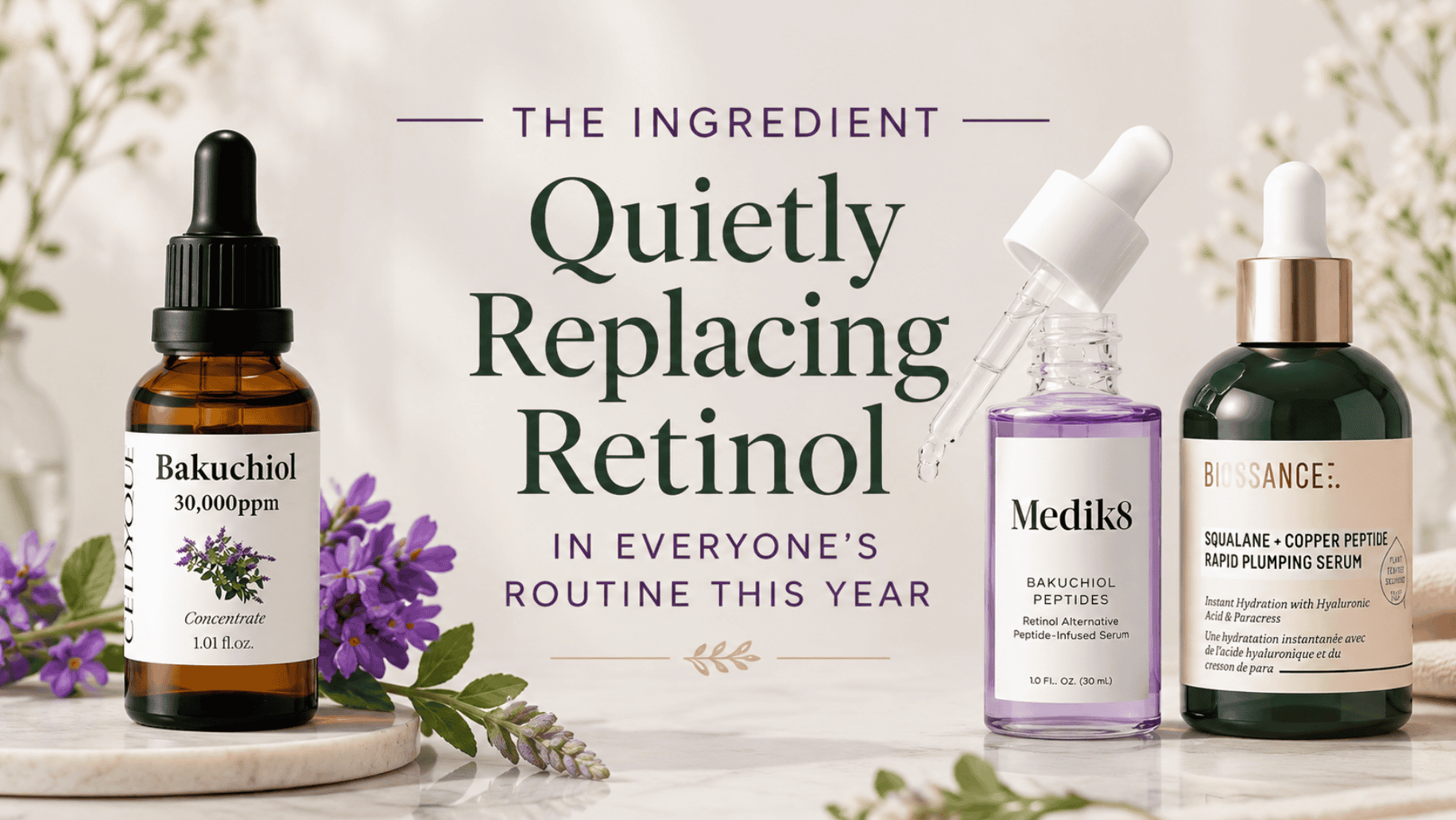
The Ingredient Quietly Replacing Retinol in Everyone’s Routine This Year

If you’ve been putting off retinol because of the redness, the peeling, the “only at night, never in the sun” rule, you’re not behind. You were right to be cautious. And this year, you finally don’t have to choose between “doing something” for your skin and feeling comfortable in it.
The ingredient is called bakuchiol (buh-KOO-chee-ol), and it’s quietly become the thing dermatologists and skincare brands are reaching for as a gentler stand-in for retinol, not a watered-down version, but a genuinely different ingredient that happens to do a lot of the same jobs.
- Why Shared Hobbies Are the Shortcut to Adult Friendships After 60
- Light, Classic, and Trending Perfumes for Everyday Wear
What Bakuchiol Actually Is
Bakuchiol is a plant-derived compound, extracted from the seeds of the babchi plant, that’s been used in Ayurvedic medicine for centuries. What’s new is the research showing it acts on the skin in a similar way to retinol, encouraging cell turnover and supporting collagen, without tapping into the same irritation pathway that makes retinol rough on a lot of skin, especially skin that’s thinner and more reactive than it was in your 30s.
Why It’s Replacing Retinol for So Many Women Over 60
No sun-sensitivity rule. Retinol breaks down in sunlight and makes skin more vulnerable to UV damage, which is why it’s a nighttime-only ingredient with a strict “wear SPF religiously” requirement. Bakuchiol is stable in daylight, so it can go in a morning routine without the same risk.
No purging phase. Starting retinol often means a few weeks of your skin looking worse before it looks better, flaking, redness, breakouts as your skin adjusts. Most people tolerate bakuchiol from the first use.
Works with sensitive or thinning skin. If your skin has gotten more reactive over the years, stings with new products, gets patchy with actives, bakuchiol is far less likely to trigger that response, so it’s easier to use consistently, which matters more than potency alone.
You can pair it with what you’re already using. Unlike retinol, which can’t be safely combined with certain acids or vitamin C without careful timing, bakuchiol plays well with most other actives, so it’s a low-risk addition rather than a routine overhaul.
What the Research Actually Shows
To be fair to retinol: it’s still the most-studied anti-aging ingredient there is, and for some concerns, deep lines, textural resurfacing, nothing else has quite as much data behind it. Bakuchiol’s research base is smaller but growing, and head-to-head studies have shown comparable improvement in fine lines and skin tone with significantly less irritation. The honest takeaway: if your skin already tolerates retinol well, there’s no urgent reason to switch. If retinol has never worked for you, this might finally be the ingredient that does.
How to Add It to Your Routine
- Start with 1-2 uses a week, even though it’s gentler. This isn’t about being cautious for no reason, it’s just good practice with any new active.
- Morning or night both work. This is the flexibility retinol doesn’t give you.
- Layer it after cleansing, before moisturizer, the same order you’d use any serum.
- Still wear SPF daily. Not because bakuchiol requires it, but because everything worth doing for your skin requires it.
What to Try

A good budget starter pick.

It’s formulated to be used both morning and night, unlike traditional retinol, and is specifically positioned for anyone who can’t use retinol at all , including those who are pregnant or nursing, or who have very reactive skin.

Biossance Squalane — probably the most recognized bakuchiol serum on the market.
The Bottom Line
Retinol isn’t going anywhere, and if it’s working for you, there’s no reason to stop. But if you’ve tried it and it’s never quite agreed with your skin, bakuchiol is the first alternative in years with real research behind it, not just a marketing rebrand of “gentle.” It’s a small swap that could finally get you the routine you’ve been trying to build all along.
What do you think of this product? Have you used it before? Interested in trying? Leave a comment below!


Bakuiunol refused with vitamin C, which do you apply first
Vitamin C goes 1st. The general order is: cleanse → vitamin C serum → bakuchiol → moisturizer → SPF (AM) or just moisturizer (PM).Vitamin C works best on freshly cleansed, slightly more acidic skin, and applying it first lets it do its antioxidant/brightening job before anything else sits on top. Hope that helps!
Is it safe to use retinol and night and Bakuchio in the day?
I’ve read that a lot of dermatologists actually recommend using it that way!
I haven’t heard of it. I have really sensitive skin & I have to be careful when trying something new. I would like to try it. Thank you for sharing it with us.
I hope it works for you!
Awesome article
Thank you. 🙂
Thanks for sharing. First time I have heard of it.
Retinol really makes my face peel. Glad to find this alternative. 😊