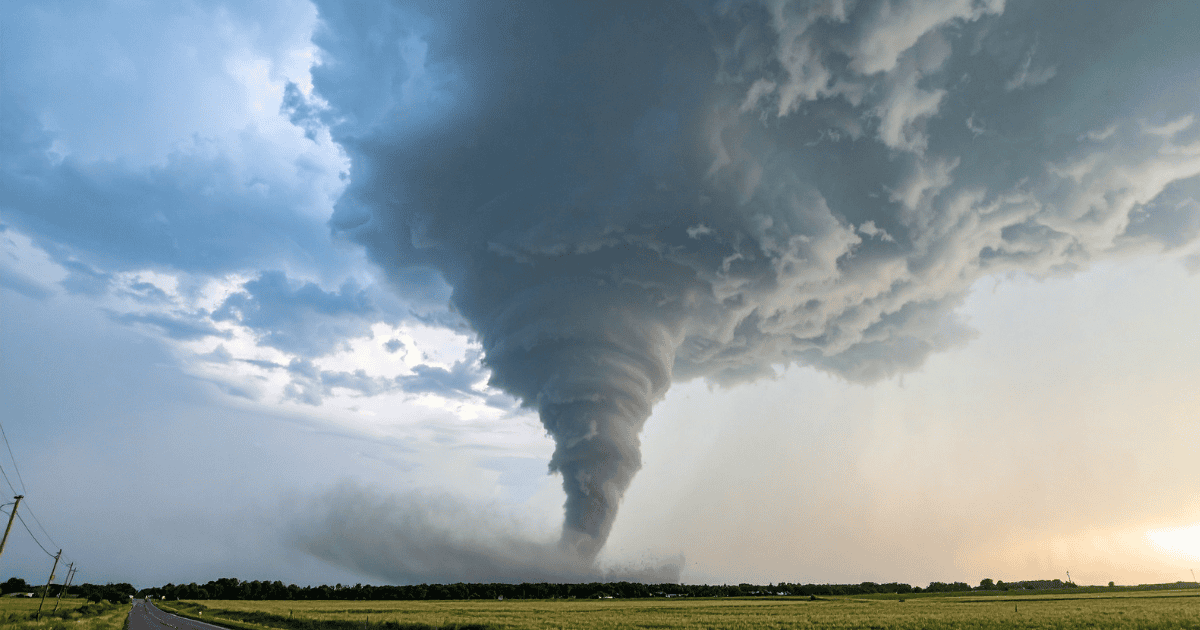
How To Stay Safe During Tornado Season

Tornado season is a powerful, often unpredictable time of year. While storms affect everyone, for people over 60, especially those managing mobility challenges or living alone, preparation can take on added urgency. The core principles of tornado safety don’t change, but how we execute them needs to be smarter, faster, and more accessible.
This guide, created for the Living Well for Seniors community, focuses on specific, practical actions you can take today to ensure your safety tomorrow.
- Home Security and Best Practices For Older Adults Living Alone
- Winter Storm? What to Do If You Lose Power or Heat
At Home: Mastering “Get In, Get Down, Get Low”
When it comes to tornadoes, speed saves lives. The standard advice is simple: “Get in, get down, get low.” For those of us moving more slowly, this requires advanced planning to remove obstacles.
1. Claim Your Safe Zone If you live in a house with a basement or storm cellar, that is your primary safe spot. However, stairs can be a significant hazard during an emergency. If a basement is not easily accessible for you, identify a “safe zone” on the ground floor. This must be an interior room without windows, such as a closet or bathroom. The more walls between you and the outside, the better.
2. The 30-Second Drill Could you make it from your favorite armchair to your safe zone in 30 seconds, even if it’s dark? Do a “dry run.” Identify any area rugs that could slip, electrical cords that could trip you, or furniture that narrows the pathway. Clear the route.
3. Head Protection is Mandatory The biggest killer in a tornado isn’t wind; it’s flying debris. While in your safe room, you need to protect your head. This might sound unusual, but keep a sturdy bicycle helmet in your safe room. If you don’t have one, heavy, thick garden cushions or even a heavy quilt pulled over you can offer a layer of protection from falling drywall or shattered glass.
Smart Buys for Storm Safety
Beyond stocking up on water and canned goods (which are always important), seniors should invest in specific “active safety” gear.
The Affordable Lifesaver: NOAA Weather Radio Do not rely solely on your smartphone for weather alerts. In a severe storm, cellular networks can become overloaded or fail entirely. A NOAA Weather Radio is an absolute necessity. These radios sound a loud, unmistakable siren the moment a “Watch” (favorable conditions) turns into a “Warning” (tornado spotted or indicated on radar). Critically, ensure the model you buy has a battery backup, as severe storms often knock out power before the tornado arrives.
Your Storm “Go-Bag” (Over 60 Edition) Instead of just a general emergency kit, create a tailored “Go-Bag” that stays in your safe zone year-round. It must include these items:
- A Whistle: If you are trapped or cannot walk, your voice will wear out long before help arrives. A whistle is loud, piercing, and can signal rescuers for hours with minimal energy.
- A Portable Power Bank: Keep a fully charged, high-capacity portable charger in your bag. This ensures you can keep your cell phone operational to call for help or notify family.
- Sturdy, Old Shoes: Keep an old pair of sneakers with thick soles inside the safe room, not by the door. If you must walk through debris or broken glass after a storm, you must do it in footwear, not slippers or bare feet.
- Written Contact List: Laminated is best. If your phone’s battery dies and you need to use a rescue worker’s phone, you must have the numbers for your family, doctor, and neighbors written down.
- Essential Medication and Eyeglasses: It is wise to have a 3-day backup supply of your critical prescriptions in this bag, along with a spare pair of glasses or hearing aid batteries.
Tornado Safety on the Road
Severe weather often strikes while we are in transit. If you are driving and see a tornado approaching, the rules of the road change instantly.
1. The Myth of the Overpass One of the most dangerous myths is that highway overpasses offer protection. This is false. Overpasses can act like a “wind tunnel,” increasing wind speeds and making debris move faster. It is far more dangerous to be under an overpass than in a ditch.
2. Seek Sturdy Shelter If a tornado is visible and you have time, exit the highway and seek shelter in a sturdy, permanent building. Good options include gas stations, grocery stores, or banks (avoid glass storefronts). Get to the center of the building and find an interior room, just as you would at home.
3. When There’s No Building If you are caught on the open road with no building in sight, stay in your car with your seatbelt buckled. Try to pull over safely. The absolute last resort is this: if there is a ditch or depression significantly lower than the roadway, you may choose to lie flat in that ditch, covering your head with your hands. However, remaining in a modern vehicle with your seatbelt buckled and head below the windows is often considered safer than lying in a shallow ditch, especially if you have mobility issues that make getting into a ditch difficult.
Your Best Tool: The “Storm Buddy”
If you live alone, the single best safety tool you have is your community. Before storm season peaks, set up a “Storm Buddy” system with a trusted neighbor or family member who lives nearby.
This is a mutual agreement:
- Check-In During the Warning: The moment a “Warning” is issued for your area, you both contact each other (call or text). This guarantees that both parties are aware of the immediate danger and are heading to their safe zone.
- Check-In After the Storm: As soon as the danger passes and you have reached safety, you check in with your buddy. If you cannot reach your buddy after the storm, you immediately know something is wrong and can alert emergency services or check on them yourself.
Preparation is the key to maintaining independence and peace of mind. Stay weather-aware, make smart purchases, and look out for one another.
Comment below with your safety tips and tricks!


Such good information. I never thought to have bike helmets down in the basement. I don’t have a portable phone charger, and I truly do not know phone numbers since cell phones have come into use.
This is live saving information. Thank you!
Love seeing peeks of your new home. Nice that your brother is so knowledgeable and capable of being sure you have the best of everything. Including a “safe room”.
I’m glad you found it helpful. Tania and I remember the Super Outbreak of 1974. We drove around and saw the devastation. My brother is very talented. 🙂
Great information. We’re planning on moving to TN so I will definitely save this to make sure we are prepared.
Thank you.
Yes! The weather can get scary here. Welcome to TN!
Great tips my sister lives in Oklahoma and last time I visited I was in an Airbnb and she came over to help me since she knows I am a Cali girl and didn’t know what to do . There was a tornado watch and she showed me how to get on the storage closet and take a big comforter to put over me. Luckily the storm passed by her town . She doesn’t have a storm shelter but her and her family Just hunker down in the hallway together with the fur babies . I am sharing this post with her . Thanks
I remember doing that as a child. We didn’t have a basement or shelter then. Scary times.
Great tips! Thank you
Thank you!
Thank you for all the great tips !
I forwarded this to all my loved ones.
Great! Stay safe. ❤️