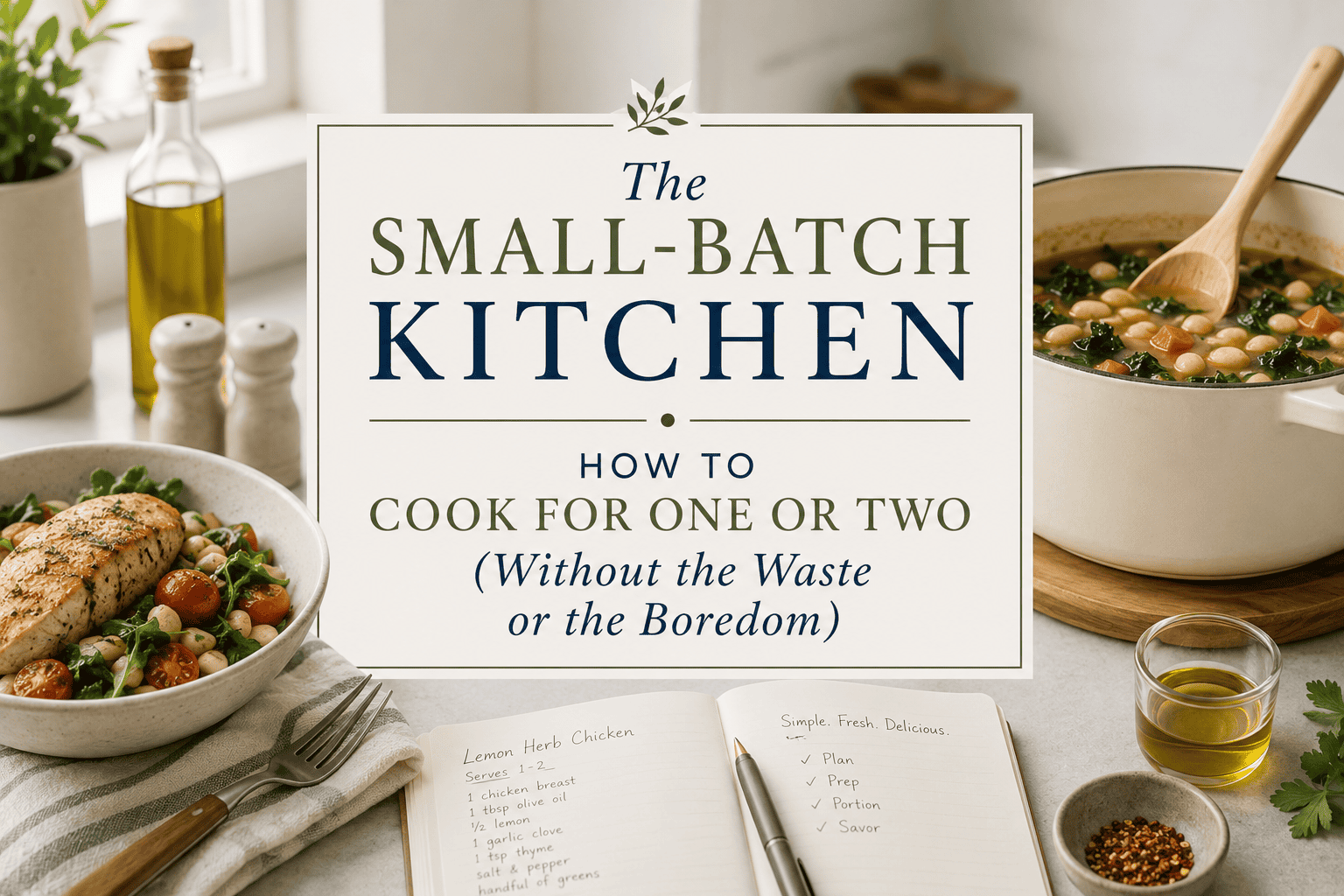
The Small-Batch Kitchen: How to Cook for One or Two (Without the Waste or the Boredom)

There is a distinct kind of kitchen frustration that comes from buying a beautiful, crisp head of celery for a recipe, using exactly two stalks, and then watching the rest slowly turn into a sad, rubbery relic in the crisper drawer.
When you are cooking for a smaller household, standard culinary advice doesn’t always translate. Most recipes are designed for families of four to six. If you scale them down, the math gets tedious; if you cook the full size, you end up facing “leftover fatigue”—that uninspiring moment on Day Four of eating the exact same chicken casserole.
But cooking for one or two shouldn’t feel like a chore or a compromise. In fact, it is the ultimate opportunity to eat exceptionally well. Smaller numbers mean you can focus on higher-quality ingredients, experiment with flavors, and enjoy gourmet-level meals without spending hours over a hot stove.
With a few strategic shifts, you can completely eliminate the waste and bring the joy back to small-batch cooking.
- Move Over, Kale: Why 2026 is the Year of the Cabbage
- Why Cinnamon May Be A Great Thing For Your Health
1. Trade “Meal Prep” for “Component Cooking”
The traditional advice of spending Sunday afternoon cooking five identical containers of food is a fast track to culinary boredom. Instead, try Component Cooking. This means preparing a few versatile, high-quality base elements that can be mixed and matched into entirely different flavor profiles throughout the week.
Think of it as a capsule wardrobe for your fridge. You want a few key pieces that work beautifully together but create totally different looks.
- The Power Protein: Roast a small batch of seasoned chicken breasts or a sheet pan of firm tofu. On Monday night, slice it fresh for a Mediterranean grain bowl. On Tuesday, toss it with lime juice and cumin for quick street tacos. By Wednesday, shred the remainder into a crisp chopped salad with a ginger-soy vinaigrette.
- The Grain Anchor: Cook a single pot of farro, quinoa, or wild rice. Use it as a hearty base for dinner bowls, a texture booster for a quick lunch soup, or crisp it up in a skillet with an egg for a fast breakfast scramble.
- The Signature Sauce: A homemade lemon-herb vinaigrette or a savory peanut sauce takes minutes to shake up in a jar, stays fresh for a week, and instantly elevates simple ingredients from plain to boutique-cafe level.
2. Smart Grocery Shortcuts You Haven’t Tried Yet
To conquer waste, you have to change how you navigate the grocery store. It is time to bypass the pre-packaged family packs and use the store’s infrastructure to your advantage.
Step Up to the Bulk Bins
If a recipe calls for a quarter-cup of wild rice, two tablespoons of chia seeds, or a pinch of an unusual spice, do not buy a massive, expensive jar that will sit in your pantry for three years. Head to the bulk section. (In that section, the store buys a huge supply, pours it into large, clear plastic dispensers, and lets you scoop out the exact amount you want into a small plastic bag or container.) Buying exactly what you need costs mere pennies and keeps your pantry lean and fresh.
The Salad Bar Hack
Need half a bell pepper, a handful of sliced mushrooms, and a sprinkle of red onion for a quick stir-fry? Skip the produce aisle and head straight to the grocery store salad bar. While the price per pound is higher, you are only buying the precise amount you need, already washed and chopped. You save time, prep work, and money by eliminating the inevitable waste of buying three whole veggies.
Master the Flash-Freeze
Your freezer is your greatest ally, but only if you use it intentionally:
- Tomato Paste: Don’t let the rest of the can spoil. Scoop the leftover paste into one-tablespoon dollops on parchment paper, freeze until solid, and pop them into a silicone bag. Grab a single tablespoon whenever a sauce calls for it.
- Artisan Bread: A beautiful loaf of bakery sourdough or French bread is a luxury, but it goes stale quickly. Slice the entire loaf immediately upon returning home, freeze the slices flat, and pop them straight into the toaster as needed.
3. Powerhouse Ingredients That Don’t Waste Away
When shopping for a small kitchen, look for “cross-utilization” stars, ingredients that can pivot between completely different styles of cooking so they never end up in the trash.
- Baby Spinach or Kale: Use it raw as a salad base early in the week. The moment it begins to look slightly soft, it can be wilted into a morning omelet, stirred into a simmering pasta sauce, or blended into a vibrant smoothie.
- The Humble Rotisserie Chicken: The ultimate small-scale shortcut. Use the breast meat for a quick, elegant dinner plate; shred the dark meat for a gourmet chicken salad lunch; and simmer the bones with a few vegetable scraps for a quick, comforting small-batch broth.
4. Right-Size Your Kitchen Tools
Cooking a single portion in a massive 12-inch skillet or a giant roasting pan usually results in dry, overcooked food because the heat distribution is too sparse. Investing in small-scale cookware changes the game.
A beautiful 8-inch cast-iron skillet, a mini 2-quart Dutch oven, or a high-quality toaster oven/air fryer are perfect for smaller households. They preheat in a fraction of the time, don’t heat up the entire house, and are perfectly proportioned for roasting a single salmon filet, a few spears of asparagus, or baking two perfect ramekins of fruit crumble.
The “Fridge Clearing” Sunday Ritual
Instead of viewing the end of the week as a time to throw things out, turn it into a creative ritual. Make your last meal before the next grocery run a “use-it-up” masterpiece.
Gather the random bits, the last two eggs, that handful of roasted vegetables, the half-block of goat cheese, and those remaining herbs. Whisk them together into a rustic frittata, bake it in your small skillet, and serve it with a crisp piece of toasted sourdough. It feels incredibly satisfying to sit down to a delicious, elegant meal knowing your food waste footprint for the week is absolutely zero.
💡 The One-Ingredient Challenge
Now, it’s your turn: Think about the one ingredient that always seems to go bad in your refrigerator. This week, challenge yourself to buy it, but intentionally use it in two completely different ways within 48 hours.
What is your biggest hurdle when it comes to cooking smaller meals? Let’s swap ideas and solutions in the comments below!






Thank you for this helpful article. It’s just me and my husband so we eat a lot of leftovers during the week. I’ve been freezing my tomato paste as mentioned and it’s so convenient to have on hand for recipes that call for only one tablespoon. I found a trick online for keeping celery fresh: cut the ends off and wrap in aluminum foil. Celery will stay fresh for weeks this way.
That’s awesome! Thanks for sharing. 🙂
These are great ideas for my household of two!
Glad you found it helpful. 🤩
The butcher is your friend! Asking for 1 large chicken breast, to split between 2. 6 or 8 ounces of ground beef. No waste, no leftovers.
Walmart is a great source for fresh fish. Packaged with 2 servings of ahi, mahi, salmon, etc. Grilled and served with steamed green beans and microwaved baked potatoes, I can have dinner for 2 on the table in 30 minutes.
Great suggestions! ❤️