The Resilience Era: Mastering Your Body’s “Inner Calm”

For years, we’ve been told that to stay healthy after 60, we should focus on the physical. Get your steps in. Watch your heart rate. Keep moving! And yes, all of that still matters. But here’s what more and more proactive adults are paying attention to in 2026: the nervous system.
Think of your nervous system as your body’s control panel. After decades of busy schedules, responsibilities, and stress, it can get stuck in “high alert” mode without us even realizing it. Learning how to gently turn that volume down isn’t about slowing life down or being delicate. It’s about staying clear-headed, steady, and full of energy for the years ahead.
Quick Definition: What is Nervous System Regulation?
In a nutshell: It is the skill of moving your body from a state of “on” (stress/tension) to a state of “ease” (recovery/rest). For active adults, mastering this shift helps maintain focus, deepens sleep, and supports your body’s natural ability to recover from a busy day.
3-Minute “Micro-Resets” for Daily Vitality
These aren’t “exercises” in the traditional sense. They are quick, science-backed resets you can do anywhere to help your body feel better immediately.
1. The Vagus Nerve Eye Reset
The vagus nerve is the “superhighway” of your relaxation system. You can actually give it a gentle nudge just by moving your eyes.
- The Routine: Sit or lie down comfortably. Interlace your fingers behind your head. Keeping your head still, look as far as you can to the right. Hold until you feel a natural “release”, usually a sigh, a yawn, or a swallow. Repeat on the left.
- The Benefit: This signals to your brain that it’s safe to relax, helping to lower tension in your neck and shoulders.
2. Somatic Shaking for Fluidity
If you ever feel “stiff” after sitting or traveling, it’s often your connective tissue (fascia) holding onto tension.
- The Routine: Stand with soft knees. Start gently bouncing and shaking your hands and arms. Let the movement travel to your shoulders and hips. Do this for 60 seconds, then stop and notice the “tingling” sensation of blood flow returning.
- The Benefit: It “wakes up” your circulation and releases the physical energy of a stressful day without the strain of heavy stretching.
3. The Physiological Sigh
This is the fastest way to “vent” the carbon dioxide that builds up when we’re stressed or rushed.
- The Routine: Take a deep breath in through your nose. At the very top, take a second, shorter “sip” of air to fully expand your lungs. Then, exhale slowly and fully through your mouth.
- The Benefit: It reinflates the tiny air sacs in your lungs and triggers an immediate “calm” signal to your heart and brain.
Tools for Your “Regulation” Toolkit
To help you track your progress and stay consistent, here are a few tools that align with this new era of health:
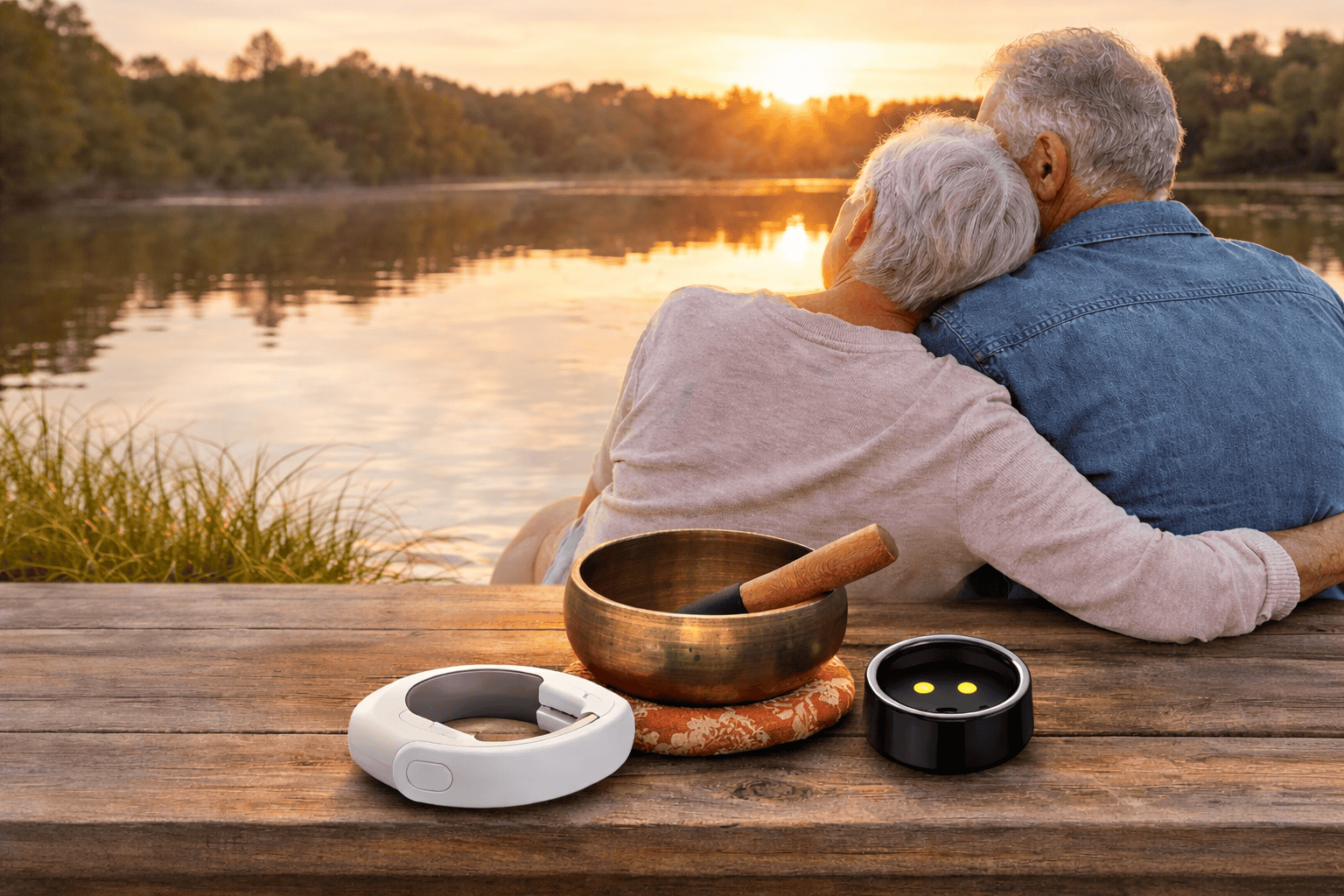
The Pulsetto Vagus Nerve Stimulator is a non-invasive wearable designed to help your body shift out of “high alert” and into a calmer, more balanced state. It works by sending gentle electrical pulses to the area of the neck where the vagus nerve is accessible, encouraging the body’s natural “rest and digest” response. People use it to support stress relief, relaxation, and better sleep, especially when they feel tense or overstimulated. It’s considered a wellness device, not a medical treatment, and is meant to complement healthy habits rather than replace medical care.
For a more traditional approach to sound and vibration, this Tibetan Singing Bowl Set is excellent for evening wind-downs. The resonance helps your brain waves slow down, making it much easier to transition into a deep, restorative sleep.
Another helpful tool is a sleep and recovery ring, like the one from Oura. This type of wearable doesn’t stimulate the nervous system directly, but it gives you valuable insight into how well your body is actually recovering. By tracking sleep quality, resting heart rate, and heart-rate variability, it helps you see whether your system is calming down at night or staying stuck in stress mode. For many people, that awareness alone is powerful. When you can see how sleep, stress, and daily habits affect your body, it becomes easier to make small changes that support a calmer, more resilient nervous system.
Can breathwork really help with daily stress?
Absolutely. Your breath is the one part of your autonomic nervous system that you can control. By practicing techniques like the “Physiological Sigh,” you are manually overriding your stress response. It’s like having a remote control for your own peace of mind helping you stay in the driver’s seat of your health.
As always, talk with your healthcare provider before using any new wellness device, especially if you have a medical condition or implanted device.
Which of these “Micro-Resets” sounds most interesting to you? Try the Eye Reset right now and let me know in the comments if you felt that “sigh of relief!”