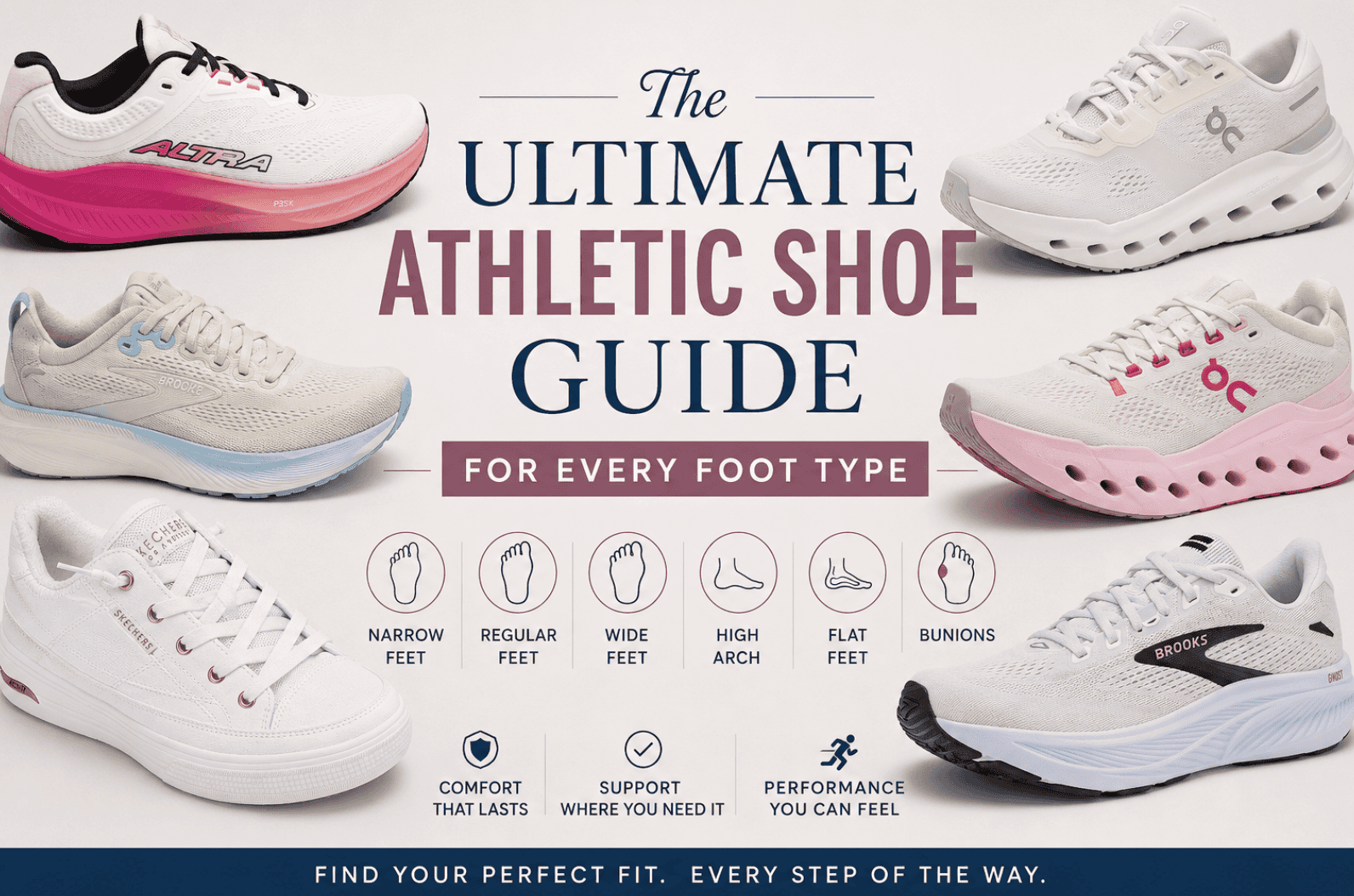
Finding Your Perfect Sole: The Ultimate Athletic Shoe Guide for Every Foot Type

Is this familiar? You spot a gorgeously sleek pair of sneakers online, read glowing reviews about how they feel like “walking on clouds,” and order them immediately. But three miles into your morning walk or a few games on the pickleball court, reality sets in. Your toes are numb, your heel is slipping, or a nagging ache starts creeping up into your knees and hips.
The truth is, standard shoe reviews almost always focus entirely on cushioning or speed. They completely ignore how a shoe actually fits the real, three-dimensional structure of your foot.
As we move through life, our feet naturally change. Arches can drop, structural width can shift, and the natural fat pads on the bottoms of our feet thin out. The shoe model you swore by a decade ago might be the very thing causing you discomfort today.
True movement wellness starts from the ground up. To help you cut through the marketing noise, we’ve broken down the best athletic shoes on the market by specific foot types, featuring a massive variety of brands, from the ultra-plush giants to sleek classics and stabilizing heroes.
- One-and-Done Outfits That Make Getting Dressed Easy
- The Ultimate Guide to Sandals for Every Foot Type
1. For Wide Feet & Bunions: Room to Breathe
The Goal: Prevent lateral pinching, numbness, and friction on the joints. Look for true wide widths (D for women, 2E for men) or brands that design shoes with a naturally anatomical toe box so your toes can splay comfortably.

- Hoka Clifton 11 (Wide): Hoka’s signature “max cushion” design is legendary for a reason. The Clifton features a wide, stable platform and a smooth “rocker” geometry that rolls you forward effortlessly. If standard shoes squeeze your feet, ordering the Clifton in a designated Wide size feels like pure liberation.
- Skechers GO WALK 8 (Wide) or Ultra Flex 3.0: If you have sensitive joints, bunions, or just hate rigid materials, Skechers is a lifesaver. Their soft, engineered knit uppers behave more like a supportive sock than a stiff shoe, stretching organically around your foot without creating painful hot spots.

2. For Narrow Feet: Total Security
The Goal: Stop the foot from sliding forward, rubbing against the front of the shoe, or lifting out of the heel cup with every step.

- Nike Pegasus 42: Nike naturally builds its shoes on a sleeker, more contoured “last” (the physical mold of the foot). The Pegasus offers an incredibly secure midfoot wrap and a tailored heel collar, making it the perfect choice for anyone who feels like they’re swimming in other brands.
- Brooks Ghost 18 (Narrow): Brooks is one of the rare premium performance brands that explicitly manufactures its flagship daily trainer in a designated Narrow (2A) width. It delivers classic, reliable, medium-firm protection without forcing you to pull the laces so tight that the upper bunches up.

3. For High Arches: The Shock Absorbers
The Goal: High arches create a rigid foot structure that doesn’t naturally pronate (roll inward) to absorb impact. This means pavement shock travels straight up into your ankles, knees, and lower back. You need deep, plush, forgiving neutral cushioning.

- On Cloudsurfer Max: On Running completely reimagined their signature pods for this model. The cloud elements collapse sequentially like a row of dominos, providing a beautifully fluid transition and massive shock absorption that cradles a rigid, high-instep foot.
- Skechers Arch Fit Arcade: For casual days when you want a classic canvas sneaker look but can’t afford to sacrifice structural support, this line features podiatrist-certified arch support built discreetly right into the footbed.

4. For Flat Feet & Overpronation: The Structural Pillars
The Goal: If your feet naturally flatten out or your ankles roll heavily inward when you move, your body needs a “stability” shoe to act as a gentle guide rail, protecting your alignment.

- Brooks Adrenaline GTS 25: The absolute gold standard of stability shoes. Instead of using hard, aggressive plastic posts under the arch, Brooks uses “GuideRails” technology. Think of them like bowling alley bumpers; they stay out of the way if your stride is straight, but gently guide your foot back into alignment if you start to roll.
- On Cloudrunner 3: For those who love the modern aesthetic of On Clouds but need real structural integrity. It features a wider base and a supportive, cradling chassis to keep flat feet feeling planted and entirely secure.

5. The Low-Profile & Minimalist Option: Ground-Feel & Balance
The Goal: While thick, “marshmallow” foam shoes are incredibly trendy right now, they aren’t the best choice for everyone. Massive stack heights can sometimes make you feel disconnected from the ground, decreasing agility or causing a sense of instability. Low-profile or “zero-drop” shoes keep your heel and forefoot level, encouraging natural alignment and building foot strength.

- Altra Torin 9: Altra is the perfect “bridge” shoe for those curious about a natural foot shape. It features a completely flat, zero-drop profile (meaning your heel isn’t elevated above your toes) and a famously spacious, foot-shaped toe box. However, it still retains a sensible, comfortable layer of underfoot cushioning so it doesn’t feel harsh on hard surfaces. It’s fantastic for overall balance and stability.
💡 Two Vital Golden Rules for Shoe Shopping
Before you hit “add to cart,” keep these two golden rules of foot wellness in mind:
The Rule of Thumb: Always buy your active walking or athletic shoes a half-size larger than your standard dress shoes or casual sandals. As we walk, move, or play sports like tennis and pickleball, our feet naturally swell and slide forward. If you don’t have a full thumb’s width of space between your longest toe and the end of the shoe, you’re setting yourself up for bruised toenails and blisters.
The Orthotic Check: If you wear custom orthotics or specific over-the-counter inserts, look for shoes with easily removable factory insoles and deep heel counters (the back wall of the shoe). Models like the Brooks Ghost or Hoka Clifton handle orthotics beautifully without making your foot feel like it’s spilling out of the top of the shoe.
Your feet carry you through every single day; giving them the specific structural match they crave is one of the easiest ways to keep your movement joyful, fluid, and pain-free.
Ultimately, investing in the right athletic shoe isn’t about chasing the latest style trends or buying into marketing hype, it is a foundational act of self-care. Your feet are the literal base of your entire alignment, and when you give them the exact structural support, width, and ground-feel they crave, you aren’t just preventing blisters; you are protecting your knees, hips, and lower back. Movement should feel joyful, fluid, and liberating. By listening to what your unique feet actually need, you can step out onto the walking trail, the pavement, or the pickleball court with total confidence, knowing you are supported every single step of the way. Happy walking!



Very useful post. Got any recommendations for ladies with EXTRA wide (EE/EEE), flat feet and overpronation? ASICS used to be my go-to but they stopped making extra wide shoes for women.
Yes, that would limit your choices! You can try Orthofeet: https://go.shopmy.us/p-68593500 They have several options! Good luck!
I swear by Brooks for my athletic shoes. I understand those decisions when building a house. When we built our house, I loved every decision it was time to make, but I wouldn’t want to need to make them again, LOL.
My dad says there are no perfect houses and just one perfect man, lol. But I’m so worn down from the decisons, I’ll be okay with anything at this point. 🙂
This is such a helpful post! I have flat feet and over pronate. I have found ON does not offer me enough stability. Brooks, Ryka, and Asics are great though.
I could never build my own house-it would never get built. I would second guess every decision.
I swear it feels like my feet are changing daily. And I have decision fatigue. Hopefully it will all come together, but glad this is the one and only one I plan on building!