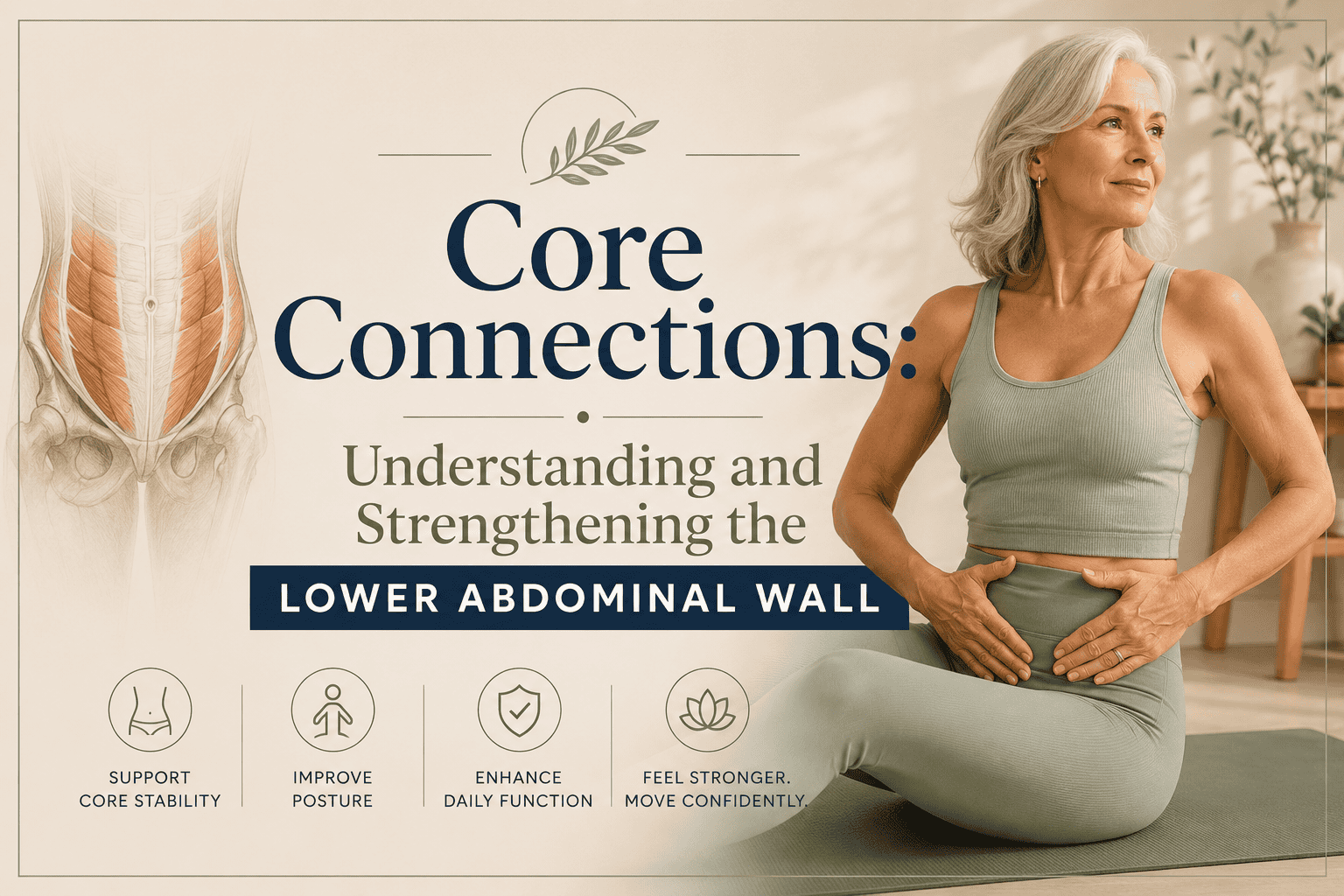
Core Connections: Understanding and Strengthening the Lower Abdominal Wall
If you have a lower belly that “hangs,” often called a “pouch” or “apron belly,” you are not alone; it is incredibly common. Whether it stems from pregnancy, weight fluctuations, structural posture, or simple genetics, this specific area often feels stubbornly resistant to traditional core exercises. The good news is that we can target the muscles behind the pouch to build structural support and strength.
The Problem with Crunches
The biggest mistake people make when targeting the lower belly is doing standard forward crunches. Crunches primarily target the upper rectus abdominis (the six-pack muscle). If the deeper, underlying muscles are weak, doing high-pressure crunches can actually push the lower abdominal contents outward. To address the lower “hang,” we need to target the muscles that pull the abdomen inward.
- Beyond the Hype: How to Actually Treat and Hydrate Crepey Skin
- The Signs of a Stroke Everyone Should Know (And What to Do Immediately)
Meet Your Natural Corset: The Transverse Abdominis
To truly strengthen the lower belly, our target is the Transverse Abdominis (TVA). This is not the visible muscle you see on athletes; it is your deepest, internal abdominal muscle. The TVA runs horizontally around your entire midsection, acting as your body’s built-in corset. When the TVA is activated and strong, it pulls the abdominal wall inward, stabilizes the spine, and provides crucial support for the lower pelvis.
4 Essential Moves for a Lower Belly Lift
This routine focuses entirely on activating the TVA and strengthening the lower core wall without back strain. Perform this circuit slowly, concentrating on the contraction.
1.1. The Deep Core Tilt (Activation): Activation | 2 sets of 10.
Before you move, you must activate. Lie on your back with knees bent and feet flat on the floor. Note the small natural arch under your lower back. Your goal is to use your lower stomach (TVA) to completely flatten that arch into the floor. Imagine pulling your belly button down to glue your spine to the mat. Exhale and hold the contraction for 3 seconds, then release.
2.2. The Dead Bug (Control): Stability | 2 sets of 8 reps/side.
Now that the TVA is activated, add movement. Raise arms up and bring your knees to a 90-degree angle. Lower one arm overhead and extend the opposite leg straight out (hovering just above the floor). Crucial detail: Your absolute priority is keeping your lower back completely flat against the mat (the posture shown in Diagram 1). If your back arches, you have extended your leg too far. Return to start and switch sides.
3.3. The Reverse Crunch (Lower Fiber Focus): Lower Abs | 3 sets of 10 reps.
Place your hands flat at your sides. Use your deep lower core muscles to tilt your pelvis backward (as practiced in Step 1) and then slowly curl your hips slightly off the mat, bringing your knees toward your chest. Lower down with extreme control; do not drop your legs. Focus on the deep lower core muscle group highlighted in Diagram 3.
4.4. The Alternating Heel Tap: Endurance | 2 sets of 12 reps alternate.
Lie on your back, knees in tabletop. Maintain the deep abdominal compression (back flat to mat). Maintaining the bend in your knee, slowly lower one heel to lightly tap the floor. Lift it back up using your lower stomach, not your thigh. Alternate heels, focusing on a perfectly still and compressed core.
Routine Visual Guide

Living Well: Consistency is Key
While these exercises are highly effective for building the functional strength and support of your lower core wall, true “living well” means understanding what this routine can and cannot do. This routine is designed to tighten the structural corset (TVA) that holds your lower abdomen inward. Consistency will improve your posture, reduce lower back strain, and can visibly firm the deep muscle wall behind the “pouch.” However, remember that you cannot “spot reduce” fat or immediately tighten loose skin with exercise alone. Achieving your aesthetic goals always involves a balanced approach to movement, nutrition, and hydration. Embrace your current progress, move your body with strength, and feel the powerful transformation that comes from strengthening your core from the inside out.
A Note on Health & Safety: While deep core exercises are generally safe and beneficial, everyone’s body and medical history are unique. This information is for educational purposes only and should not replace professional medical advice. Always consult with your physician or a physical therapist before starting a new exercise regimen, especially if you are recovering from surgery, or experiencing chronic lower back pain.
Source: PubMed






I look forward to your practical and timely posts! Thank you for sharing the tools to age healthfully and graceful!
You’re so welcome. These are all things I’m dealing with, so I thought I might as well share. 🙂