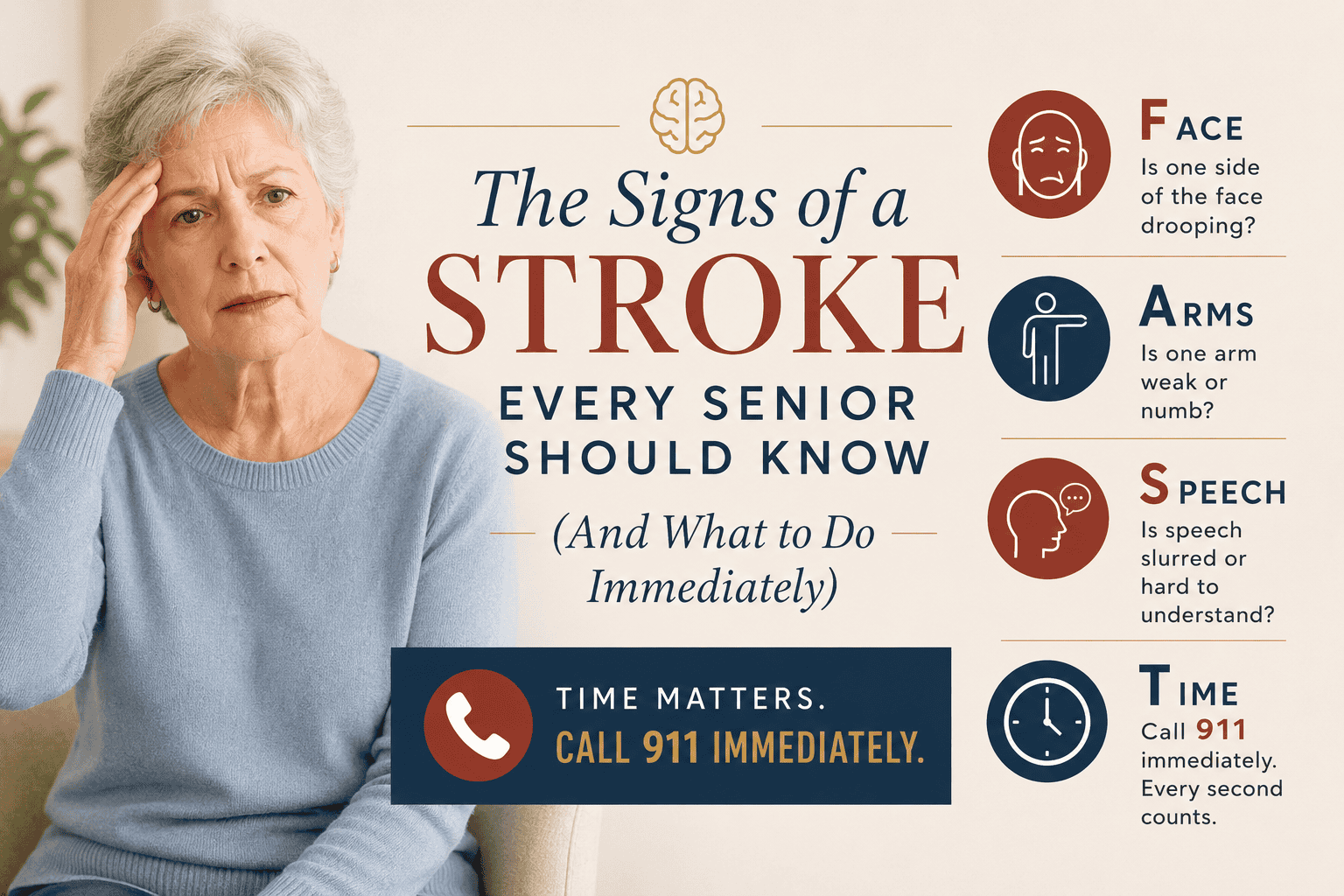
The Signs of a Stroke Everyone Should Know (And What to Do Immediately)
A stroke can happen suddenly and without warning, but recognizing the signs quickly can save a life and reduce long-term damage. When it comes to a Stroke, every minute matters.
Many people assume strokes only happen to the very elderly, but they can affect adults of all ages. Knowing how to spot the symptoms, what to do next, and how to lower your risk could help save your own life or someone you love.
- Understanding Alpha-gal Syndrome: The “Red Meat Allergy” You Need to Know About
- The Ultimate Guide to Beating Bloat: Daily Habits and Instant Remedies for Mature Gut Comfort
What Is a Stroke?
A stroke happens when blood flow to part of the brain is blocked or when a blood vessel in the brain bursts. Without oxygen-rich blood, brain cells begin to die within minutes.
There are two main types of strokes:
- Ischemic Stroke: Caused by a blockage or clot (most common)
- Hemorrhagic Stroke: Caused by bleeding in the brain
There is also something called a TIA (Transient Ischemic Attack) or “mini-stroke.” Symptoms may go away quickly, but it is still a medical emergency and a major warning sign that a larger stroke could happen later.
How to Spot a Stroke: Remember BE FAST
Doctors recommend using the acronym BE FAST to recognize the warning signs of a stroke quickly.
B — Balance
Sudden loss of balance, dizziness, or trouble walking.
E — Eyes
Sudden blurry vision, double vision, or loss of vision in one or both eyes.
F — Face Drooping
One side of the face may droop or feel numb. Ask the person to smile. Is the smile uneven?
A — Arm Weakness
One arm may feel weak or numb. Ask the person to raise both arms. Does one drift downward?
S — Speech Difficulty
Speech may sound slurred, confused, or difficult to understand.
T — Time to Call 911
If you notice ANY of these signs, call 911 immediately.
Do not wait to “see if it gets better.”
Other Possible Stroke Symptoms
Not every stroke looks the same. Some people experience less obvious symptoms, including:
- Sudden severe headache
- Numbness on one side of the body
- Tingling in the face, arm, or hand
- Confusion
- Difficulty understanding speech
- Sudden fatigue or weakness
- Trouble swallowing
- Sudden nausea or vomiting with dizziness
Women, in particular, may sometimes experience more unusual symptoms like sudden confusion, fainting, or extreme fatigue.
What To Do If You Think Someone Is Having a Stroke
If you suspect a stroke:
Call 911 Immediately
Do not drive yourself or the person to the hospital unless absolutely necessary. EMS can begin treatment on the way.
Note the Time Symptoms Started
Doctors need to know when symptoms began because certain clot-busting medications must be given within a specific timeframe.
Keep the Person Safe and Calm
Have them sit or lie down safely while waiting for help.
Do NOT Give Food, or Drink
A stroke can affect swallowing, increasing the risk of choking.
Do NOT Give Them Medications
Never give the person aspirin, blood thinners, or any other medication. Strokes can be ischemic (caused by a clot) or hemorrhagic (caused by a bleed). Giving aspirin to someone having a hemorrhagic stroke can worsen the bleeding significantly.
Even If Symptoms Go Away, Get Medical Help
A “mini-stroke” is still serious and should never be ignored.
Stroke Risk Factors Seniors Should Know
Some stroke risk factors cannot be changed, like age and family history, but many can be managed.
High Blood Pressure
This is the biggest risk factor for stroke.
Diabetes
High blood sugar damages blood vessels over time.
Smoking
Smoking dramatically increases stroke risk.
High Cholesterol
Plaque buildup can block blood flow to the brain.
Heart Conditions
Especially irregular heartbeat conditions like atrial fibrillation.
Obesity and Inactivity
Lack of movement increases the risk of blood clots and heart disease.
Excess Alcohol Use
Heavy drinking can raise blood pressure and stroke risk.
How to Help Prevent a Stroke
The good news is that many strokes are preventable.
Know Your Numbers
Keep track of:
- Blood pressure
- Cholesterol
- Blood sugar
Move Your Body Daily
Even a 20–30 minute walk helps improve circulation and heart health.
Eat a Heart-Healthy Diet
Focus on:
- Fruits and vegetables
- Lean proteins
- Whole grains
- Healthy fats
Limit excess salt, sugar, and processed foods.
Stop Smoking
It’s never too late to lower your risk.
Take Medications as Prescribed
Especially medications for blood pressure, cholesterol, diabetes, or heart conditions.
Don’t Ignore Warning Signs
Many people dismiss tingling, numbness, dizziness, or slurred speech because symptoms improve. Quick treatment can dramatically improve outcomes.
The Bottom Line
When it comes to strokes, acting fast truly matters. Learning the warning signs and knowing what to do could save a life, possibly your own.
Take a few minutes today to share the BE FAST acronym with your spouse, children, friends, and neighbors. You never know when that knowledge could make all the difference.
Disclaimer
This article is for informational purposes only and should not be considered medical advice. Always consult your doctor or healthcare provider regarding medical concerns, symptoms, or treatment decisions. If you suspect a stroke or medical emergency, call 911 immediately.


My father had a minor stroke in his 60s, which affected his balance a bit. But he is vigilant about his health since then. He’s 99 years old, and will be 100 in a few months. So things could definitely take a positive turn for your Aunt. My dad also tells me (I’m 70) that I am in the “danger zone” now and to take care of myself, i.e., eating habits, exercise, seeing the doctor to have the necessary tests. I’m basically in good health but take his advice seriously. I hope your Aunt will be up and around soon with no residual problems. She looks adorable!
I love this! Thank you for sharing. Her stroke was a wake-up call for me! And yes, she is adorable. 🙂
Thank you for this timely reminder. Prayers for your aunt’s full recovery and for your family.
Thank you! We appreciate them!
🙏🙏🙏
Thank you! 🙂
Thank you for the information about strokes. Prayers for your aunt.
Thanks so much, Janice! She just said, “I’ll take all the prayers I can get!” xo
I will be praying for you Aunt to be completely recovered and well from the effects and other issues. I know you want to keep her with you for many years to come ❤️
Thank you for the great article. My Mom has had two TIAs so any information on strokes is very important to me.
Thank you! It’s become very important to me suddenly. I’m glad to learn and share this information. ❤️