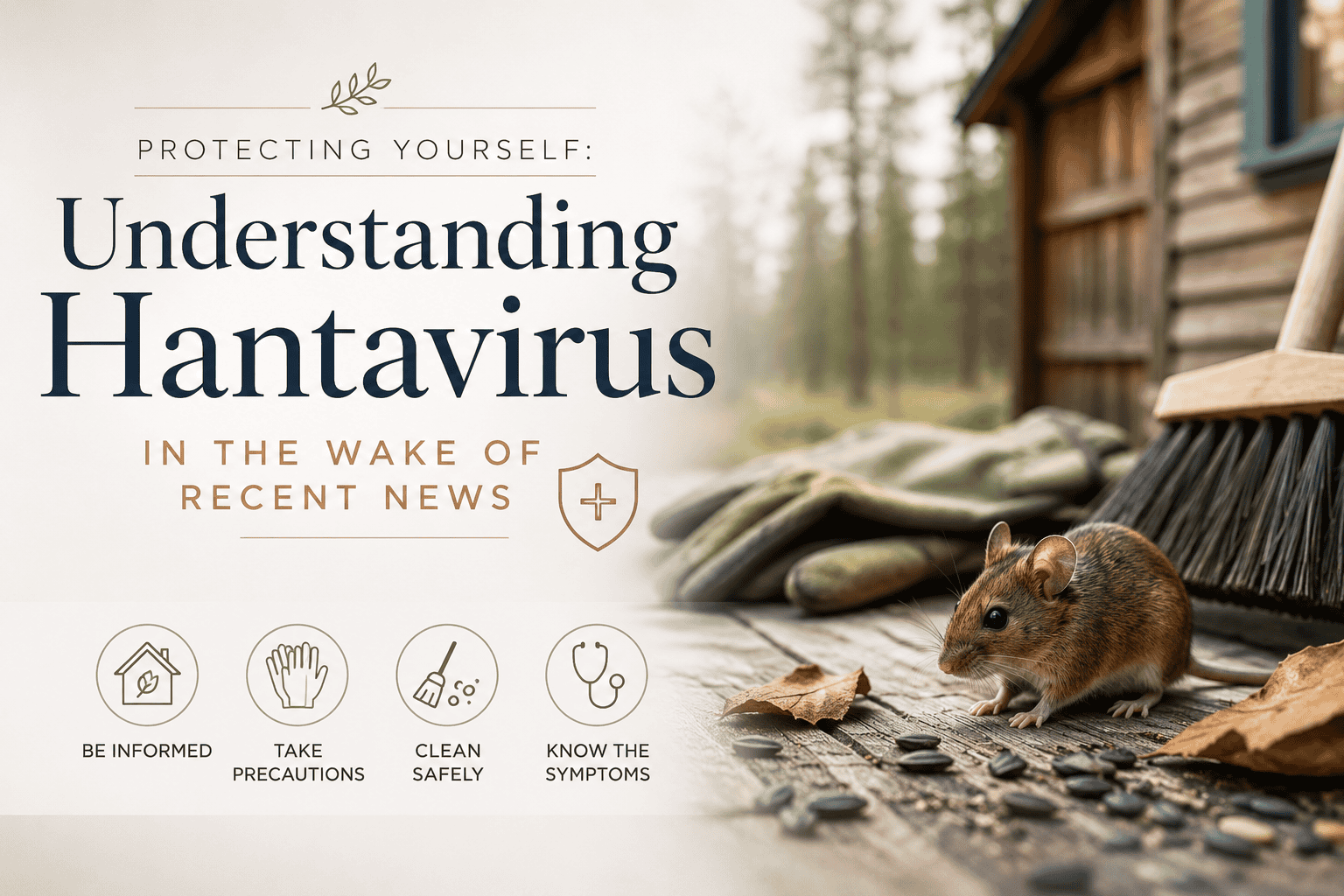
Protecting Yourself: Understanding Hantavirus in the Wake of Recent News
The recent headlines have been unsettling. Reports of a tragic hantavirus outbreak aboard a cruise ship in the Atlantic have sparked nationwide concern, and the news has hit closer to home for many film fans with the revelation that Betsy Arakawa, the longtime wife of Hollywood legend Gene Hackman, passed away from the virus last year in their New Mexico home.
For many of us, the cruise ship story feels like a distant travel nightmare, while the loss of Betsy Arakawa serves as a sobering reminder that this “rare” virus can strike anywhere, even in a well-loved family home. At Living Well for Seniors, our goal is to provide clarity over fear. While hantavirus is serious, it is also preventable.
Here is everything you need to know about what hantavirus is, how it spreads, and the specific steps you can take to stay safe.
- The Vagus Nerve: Your Body’s Hidden “Reset” Button for 2026
- The Coffee-Gut Connection: Why Your Morning Cup is a Mood-Shaping Powerhouse
What Exactly is Hantavirus?
Hantavirus is not a single virus, but a family of viruses spread mainly by rodents. In North and South America, it primarily causes Hantavirus Pulmonary Syndrome (HPS), a severe and sometimes fatal respiratory disease.
Unlike the common cold or the flu, hantavirus is not usually spread from person to person. Instead, it is a zoonotic disease, meaning it jumps from animals to humans. The recent cruise ship incident, where multiple passengers fell ill, is currently being investigated by the World Health Organization (WHO) to determine if a specific strain (like the Andes virus found in South America) might have allowed for rare person-to-person transmission, or if there was a shared exposure to rodents.
The “Silent” Risk in Your Home
In the case of Betsy Arakawa, investigators found evidence of rodent nests and droppings in their residence. For seniors living in the American Southwest (like New Mexico and Arizona) or rural areas, the Deer Mouse is the primary carrier. These mice are small, cute, and seemingly harmless, but they can carry the virus in their urine, droppings, and saliva.
How It Spreads: The Danger of “Dust”
You don’t have to be bitten by a mouse to catch hantavirus. In fact, most people get sick through airborne transmission.
When rodent droppings or nesting materials are disturbed, often during cleaning or when opening up a shed, the virus becomes “aerosolized.” This means tiny, invisible droplets enter the air. When you breathe that air in, the virus enters your lungs.
Common ways seniors are exposed include:
- Cleaning out the “junk” room: Dusting or sweeping an attic, basement, or garage that has been closed up for months.
- Opening a seasonal cabin: Entering a vacation home that has been uninhabited over the winter.
- Gardening and yard work: Disturbing woodpiles or clearing brush where rodents may have nested.
Recognizing the Symptoms: Is it Flu or Hantavirus?
One of the most dangerous aspects of hantavirus is that it starts off looking like a common seasonal illness. This can lead to a “wait and see” approach that can be life-threatening.
Early Symptoms (Days 1–5)
If you have been exposed, symptoms usually appear within 1 to 8 weeks. Initial signs include:
- Fever and Chills: Often a high fever (above 101 F)
- Muscle Aches: Deep aches in the large muscle groups like the thighs, hips, and back.
- Fatigue: Feeling unusually worn out.
- Digestive Issues: About half of patients experience nausea, vomiting, or stomach pain.
Late Symptoms (The “Lungs Filling” Phase)
Four to ten days after the initial phase, the disease progresses rapidly. The lungs begin to fill with fluid, leading to:
- Shortness of Breath: Feeling like you cannot get enough air.
- Coughing: A dry, persistent cough.
- Tightness in the Chest: A sensation of “a band around the chest.”
Critical Note: If you have been in an area with rodents and experience sudden shortness of breath, seek emergency medical care immediately. Tell the doctor explicitly: “I have been in contact with rodent droppings/dust.”
Why Old Adults Should Be Extra Vigilant
As we age, our immune systems naturally become less robust, and our “respiratory reserve”, the capacity of our lungs to handle stress, decreases. A virus that causes fluid in the lungs is significantly more dangerous for a 75-year-old than a 25-year-old.
Furthermore, many seniors enjoy hobbies that increase exposure, such as woodworking in a garage, gardening, or traveling to rural vacation spots. Taking a few extra precautions doesn’t mean giving up these joys; it just means doing them safely.
Prevention: The “Seal Up, Trap Up, Clean Up” Strategy
The best way to stay safe is to keep rodents out of your living space entirely.
1. Seal Up
Mice can fit through a hole the size of a dime.
- Check for gaps around pipes, under sinks, and around baseboards.
- Use steel wool or caulk to plug these holes; mice can chew through wood and plastic, but they hate the feel of steel wool.
2. Trap Up
If you suspect mice are in the house:
- Use snap traps along baseboards.
- Avoid using poison bait, as a poisoned mouse might crawl into a wall to die, making it difficult to clean up safely later.
3. Clean Up (The Right Way)
NEVER sweep or vacuum rodent droppings. This kicks the virus into the air where you can breathe it in. Instead, follow these steps:
- Wear Protection: Put on rubber or latex gloves and, if possible, an N95 mask.
- Soak the Area: Spray the droppings or nest with a disinfectant or a mixture of 1 part bleach to 9 parts water.
- Wait: Let it soak for 5 minutes to kill the virus.
- Wipe, Don’t Sweep: Use a paper towel to pick up the material and dispose of it in a sealed bag.
- Mop: Clean the entire area with disinfectant.
Staying Safe while Traveling
When traveling, the “rules of engagement” for hantavirus shift from home maintenance to situational awareness. Because the virus is primarily inhaled via dust from rodent droppings, your safety depends on the environments you enter and how you interact with them.
Here is how to stay protected while on the move, whether you’re at sea or in a rural cabin.
1. In Hotels, Cabins, and Vacation Rentals
Most travel-related cases occur in rustic or seasonal lodging that has been closed up for a long period.
The “Sniff and Look” Test: Upon entering a room, look for mouse droppings (which look like small grains of black rice) in drawers, under sinks, or in corners. If you smell a strong, musty, urine-like odor, the area may have an infestation.
Ventilate Before Settling In: If a cabin has been closed for a season, do not enter and immediately start sweeping. Open all doors and windows and leave the building for at least 30 minutes to allow the air to exchange.
Report, Don’t Clean: If you find evidence of rodents in a rental, do not attempt to clean it yourself. Notify the management or park ranger immediately. They should have professional protocols (including N95 masks and specific disinfectants) for cleanup.
2. On Cruise Ships (The “New” Risk)
While hantavirus on a cruise ship is extremely rare, the recent headlines have changed the advice for maritime travelers
Cabin Vigilance: If you see a rodent or droppings in your cabin, report it to the crew immediately. Avoid the area and do not use a vacuum or broom, which can aerosolize the virus.
Air Exchange: If a room has to be cleaned due to rodent activity, experts recommend it stay vacant for at least 90 minutes after cleaning to ensure any airborne particles have settled or been filtered out by the ship’s ventilation.
Hygiene: Frequent handwashing remains the gold standard, as transmission can occur if you touch a contaminated surface and then touch your nose or mouth.
3. Camping and Hiking
Elevate Your Sleep: Avoid sleeping on the bare ground. Use a cot that is at least 12 inches off the floor, or a tent with a built-in floor and zippered screen.
The “Clean Camp” Rule: Store all food, water, and trash in rodent-proof containers (like heavy plastic bins or metal lockers). Never keep food inside your tent, as mice can chew through fabric in minutes.
Pitching Site: Avoid setting up camp near woodpiles, heavy brush, or rock outcroppings where rodents likely have nests.
4. Post-Travel Monitoring
The most critical “prevention” against a severe outcome is early detection.
The 45-Day Window: Because the incubation period can be long, keep a mental note of your travel for 45 days.
Be Your Own Advocate: If you develop a high fever and muscle aches after a trip to a rural area or a cruise, tell your doctor: “I was traveling and may have been exposed to rodents.” This specific detail can trigger the right diagnostic tests that a standard “flu” screening might miss.
A Final Word on the News
It is heartbreaking to hear about the loss of Betsy Arakawa and the victims on the Atlantic cruise. (It is also worth noting that while Mr. Hackman passed away shortly after his wife, his death was attributed to natural causes/heart disease, rather than the virus).
These stories are a “call to action” for the rest of us. You don’t need to live in fear of the outdoors or your home. By keeping your living areas mouse-free and using the “wet cleaning” method for any dusty corners, you can enjoy your retirement with peace of mind.
Stay safe, stay informed, and always breathe easy.
Do you have questions about rodent-proofing your home or want more tips on staying healthy while traveling? Let us know in the comments below!







Most informative article that I have read. I appreciate your time and effort.
Thanks, Paula. I know a lot of us are cleaning out garages and sheds, etc. It pays to be careful!
Fantastic information. Very empowering. I feel less helpless.
Oh, good! I’m glad the info was helpful. 🙂
Thank you very much. I was about to sweep a small shed. I found mice had be in. Also we had small dogs which eat acorns whenever possible.
Tania and I cleaned out our mom’s shed a few years ago. It was SO hot, but we used masks and gloves. You have to be careful. 🙂
Thank you for this easy to understand post! The news I have seen so far has been kinda vague on this subject! I live on a farm & our barn/shop is impossible to keep rodent free. I thought I only needed to worry about the occasional snake! 😫 Sounds like you can relate! Love your newsletter, and your pet stories!
I certainly can, lol. I guess the snakes eat the rats so we’re good. 😛
Thank you so much , Lisa for this post! Very informative and thorough!
You’re welcome! 😉
Thanks Lisa for this information I shared it with my husband. This is scary.
It pays to be safe!
Thank you
❤️. You’re welcome.